


You need a light chain to hang a sign, a light fixture, or a display. Several products are sold as “jack chain,” but their links, sizes, and working load limits may differ. What does the name actually tell you? This article explains how jack chain is made, where it is used, and where its limits are.
Jack chain is a light-duty, weldless chain made from shaped wire links that interlock without a weld at each link. Single jack chain is a common form; some catalogs also list double jack chain as a separate product type. Jack chain is commonly used to suspend light fixtures, signs, displays, and decorative items. The name alone does not tell you how much weight a particular chain can hold.
How Is Jack Chain Made?
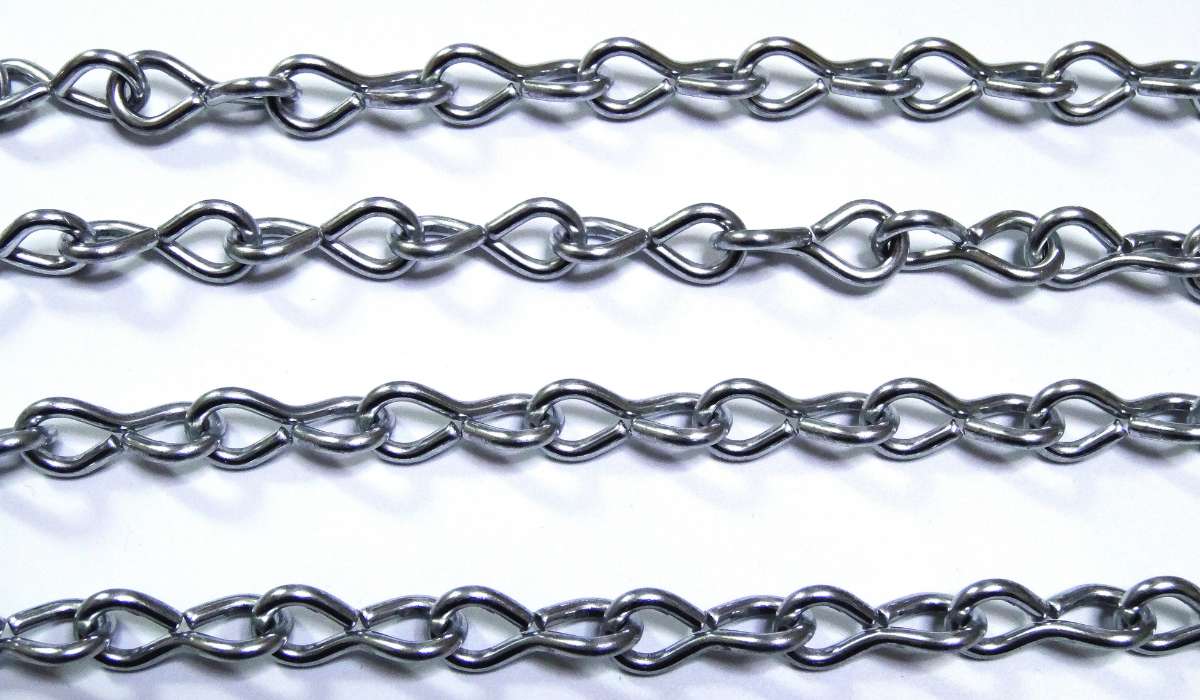
A typical single jack chain starts with thin metal wire. Each piece is bent into a figure-eight-like link and connected to the next. The links hold together through their shape rather than a welded joint. That is why suppliers classify single jack chain as weldless chain.
The shaped links give the chain its familiar, compact look and allow it to hang flexibly. You can often identify it by the repeated wire loops, but appearance is only a starting point. Wire diameter, link dimensions, material, and how the links are formed can change from one product to another.
“Weldless” describes the link construction. It does not mean that every weldless chain has the same capacity, or that an open link can be loaded in any direction. Jack chain is generally made for light-duty work where high strength is not required.
What Do Single and Double Jack Mean in a Catalog?
Single jack chain is the figure-eight-link style described above. Manufacturers list double jack chain as another product type. They give each type its own link dimensions and working load limit. Check the supplier’s drawing or sample if you need to identify the link form in a particular product.
The names tell you which catalog type to look up. They do not establish that a double jack chain will always carry more than a single jack chain with the same trade-size number. Compare the specifications for the exact products instead.
What Is Jack Chain Used For?
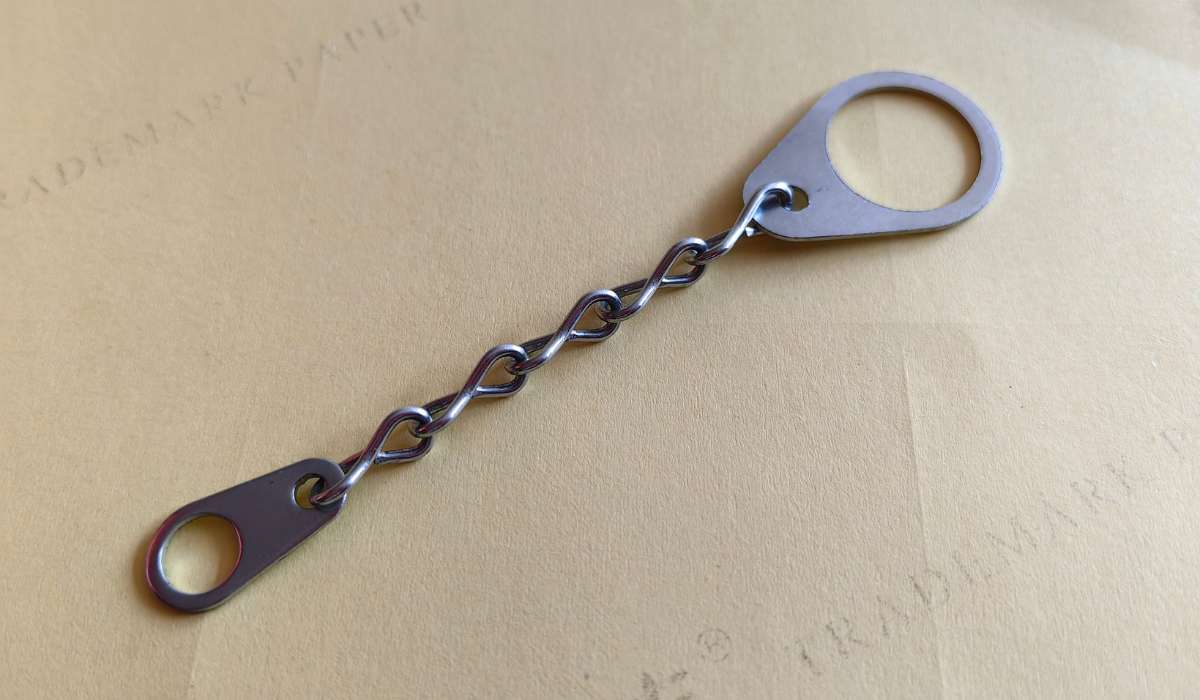
Jack chain works well when you need a flexible, small-link chain for a light hanging or decorative task. Common examples include suspending light fixtures, hanging signs, supporting retail displays, and adding chain to decorative hardware. Electrical and lighting suppliers also sell jack chain for fixture support.
These examples describe uses, not a blanket approval for every installation. A hanging sign or fixture still needs a chain with a suitable working load limit, compatible end fittings, and sound mounting points. If a display moves, is bumped, or hangs where a failure could harm people or property, assess the full installation and any applicable installation requirements. A common-use example or the chain’s WLL alone is not enough.
Jack chain may also be chosen for how it looks. A short, neat link pattern and the available finishes can matter in a visible display. Those visual benefits do not replace a load check.
What Do the Material, Finish, and Size Labels Mean?
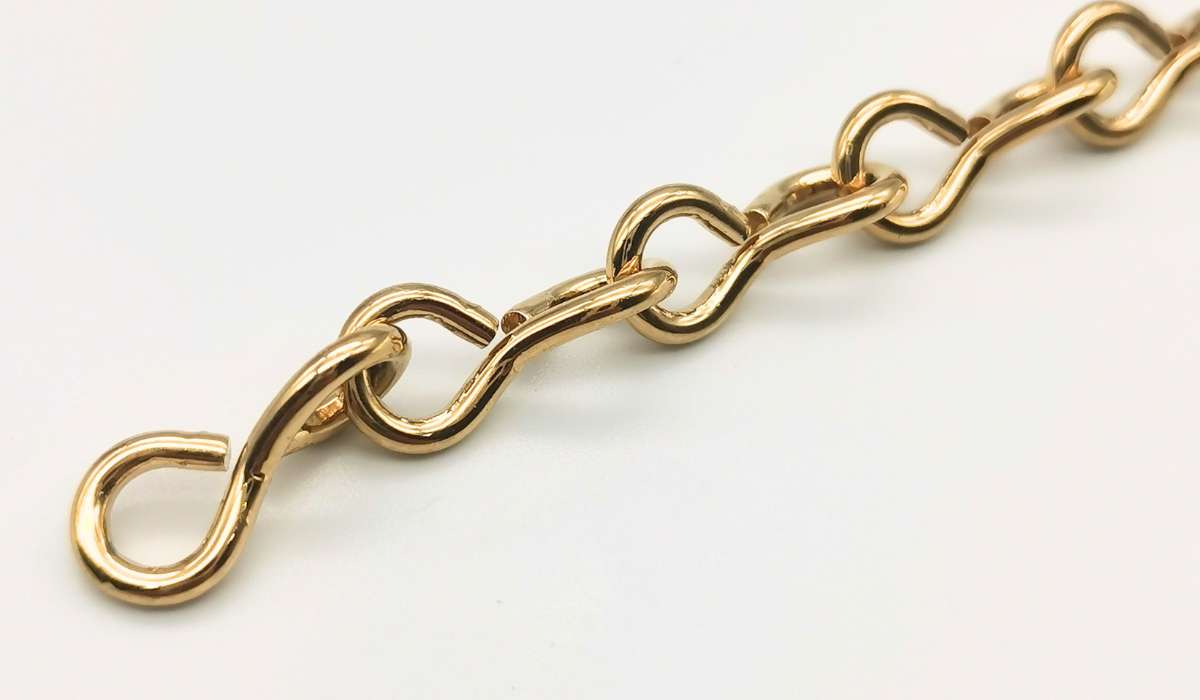
Jack chain is sold in several materials and finishes. Some products use low-carbon steel with a zinc or galvanized finish. Other product lines offer stainless steel, solid brass, or aluminum. A nickel or black finish describes the surface appearance or treatment; it does not, by itself, identify the metal underneath. A brass-colored finish is also not the same thing as a solid brass chain.
Material and finish can affect appearance and suitability for the environment. For example, a coated steel chain and a stainless steel chain should not be treated as identical when moisture or corrosion matters. Availability and performance depend on the specific product. A finish alone does not raise its working load limit.
Catalogs may give a trade size such as #16 jack chain. That number is a product size label, not a universal statement of wire diameter or load capacity. To understand a particular chain, look for these separate entries:
| Catalog item | What it helps you check |
|---|---|
| Chain type | Whether the product is single or double jack chain |
| Wire diameter | The actual thickness of the wire used for a link |
| Inside link length | Whether the link fits the intended hook or connector |
| Material and finish | The metal and surface supplied for that product |
| Working load limit (WLL) | The maximum stated working load under the maker’s specified conditions |
Two suppliers can use the same trade-size number while listing different dimensions or WLLs. Use the current sheet for the exact chain you are buying. Do not convert a trade-size number into wire gauge or assume that it gives you a universal load rating.
What Are the Limits of Jack Chain?
Jack chain is not lifting chain. Manufacturers of single jack chain explicitly warn against overhead lifting and hoisting. Its light-duty hanging uses do not make it suitable for raising a load, towing, or securing cargo. Those jobs call for equipment selected and rated for that specific task.
Even in a normal hanging application, the working load limit applies to a particular product under stated conditions. A manufacturer’s WLL is not the same as a breaking load. Straight, untwisted chain under an even pull is different from a chain that is jerked, twisted, worn, corroded, or altered. Those changes may reduce its usable capacity.
The chain is only one part of the installation. A hook that does not fit the link, a weak anchor, or an unsuitable connection can fail first. Check the chain, the end fittings, and the mounting points as a complete assembly. Replace a chain with bent, opened, badly worn, or corroded links rather than treating the original rating as still valid.
How Is It Different From Other Chain Types?
Jack chain is defined by its small, formed wire links and weldless construction. In welded chain, the joint in each link is welded. That construction difference does not mean every welded chain is approved for lifting; its grade and rating still matter.
Sash chain and double-loop chain are other named weldless chain styles. Suppliers list them separately from jack chain because the link designs and available specifications differ. If you need a replacement for an existing assembly, compare the link shape, dimensions, connectors, and product rating. Similar-looking chain names are not a reliable substitute for those details.
Frequently Asked Questions
If jack chain cannot be used for overhead lifting, why is it used for lights?
Supporting a fixed light fixture and lifting a load are different tasks. Manufacturers list light fixtures as a common application while warning against hoisting. That does not approve every fixture or overhead location. Check the specific chain, connectors, mounting points, and applicable fixture installation requirements together. If failure could harm people or property, do not decide from a typical-use example or the chain’s WLL alone.
Can I use jack chain outdoors?
It depends on the chain’s material, finish, exposure, and the maker’s guidance. Moisture and corrosion can affect a chain over time. Confirm that the selected product and all its fittings suit the site, then inspect them during use. A black or shiny finish alone is not proof of outdoor suitability.
What if the end hook fits through the link but feels loose?
Fit is more than whether the hook passes through the opening. Check that the connector stays engaged in the expected direction of pull and that its rating suits the full assembly. The chain’s WLL cannot compensate for an unsuitable hook or anchor.
Is the “jack chain” used in medieval armor the same product?
No. The term also appears in discussions of arm protection in historical armor. This article uses the modern hardware meaning: a light-duty chain of interlocking wire links.
The Main Point
Jack chain is a compact, weldless wire chain used mainly for light hanging and decorative work. Its link style helps you recognize it, but the specific chain’s dimensions, material, and WLL determine whether it suits your application. For a fixture, sign, or display, check the complete connection and stay within the product’s stated limits. Use equipment designed for the job when the task involves lifting, towing, or cargo restraint.


 English
 Russian
 Spanish
 Czech
 German