


If a purchase request says only “industrial chain,” a supplier still cannot tell which chain you need. A chain that drives a machine, one that moves goods, one that secures cargo, and one used in a lifting sling have different designs and safety requirements. Two chains that look alike or have the same nominal diameter may not be interchangeable. This guide first separates the main industrial chain types, then focuses on link chains and the details buyers need to check.
Choose an industrial chain by its job first. Roller chain mainly transmits power. Conveyor chain moves material. Leaf chain is often used in lifting mechanisms such as forklift masts. Link chain can be used for load securement, towing, lifting, or hanging, depending on its type. Once you know the job, check the required chain construction, grade, size, working load limit, and service conditions.
What Are the Main Types of Industrial Chains?
“Industrial chain” is a broad term. The table gives examples of chain names you may meet for different purchasing tasks. Some names describe construction and others describe a use, so these categories overlap. For example, a conveyor chain may use rollers. You must still identify its construction and series from the equipment specification.
| Chain name | Typical purchasing task | First details to check |
|---|---|---|
| Roller chain | Engages sprockets to transmit rotary power | Chain series, pitch, roller and sprocket sizes, speed, and lubrication |
| Conveyor chain | Moves products or bulk material through equipment | Material being moved, travel path, attachments, pitch, wear, and cleaning conditions |
| Leaf chain | Transfers pulling force in equipment such as forklift masts | The equipment’s specified chain series, end connections, load, and inspection needs |
| Link chain | Secures, pulls, lifts, or hangs a load, depending on the chain | Welded or weldless construction, grade, working load limit, link size, fittings, and environment |
Roller, conveyor, and leaf chains usually work with a specific machine, sprocket, or guide system. Link chains use connected metal links, and the right choice depends first on the task. A cargo tie-down chain, a lifting chain sling, and a lighting chain are all related to link chain, but they do not share one load requirement just because they are metal chains. The rest of this guide focuses on welded link and weldless hardware chains.
How Are Industrial Link Chains Classified?
Start with the way the links are made. In a welded link chain, each formed link is closed by a weld. A weldless chain uses link shape and interlocking links instead. Weldless styles are common in lighter hanging, display, window, and hardware uses.
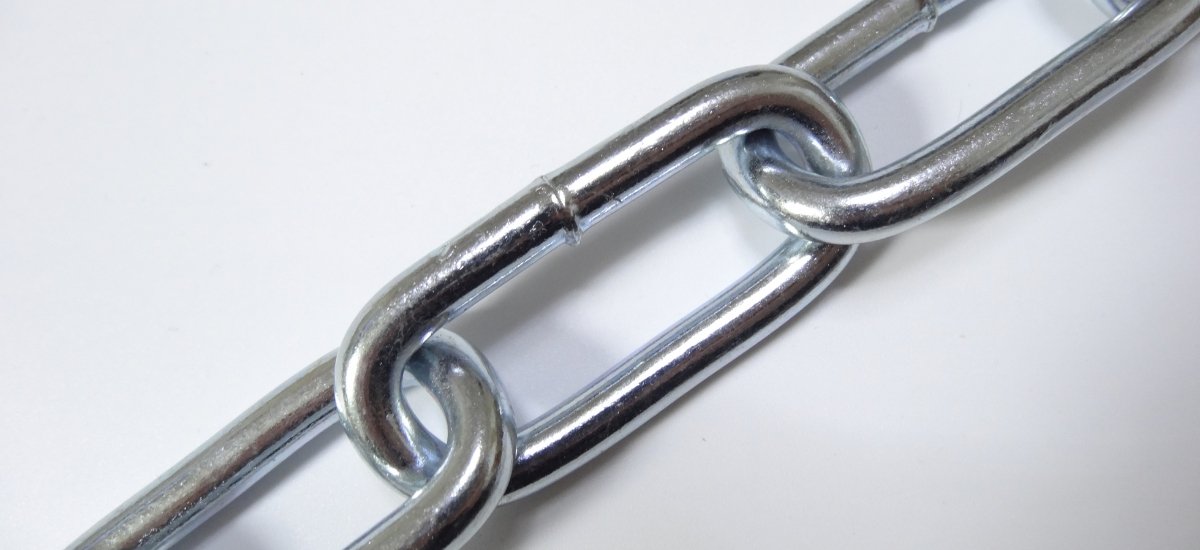
Then look at the chain’s job and specification. The G70 in G70 transport chain is a grade. Double loop chain names a link design. Stainless steel chain names a material. These terms describe different things, so they should not be put into one simple strength ranking. Zinc plating, hot-dip galvanizing, or stainless steel also cannot stand in for a working load rating.
Appearance is not enough for any chain that must carry a rated load. Link thickness, length, or color alone does not prove the grade. It also cannot show whether an assembly with hooks is fit for a specific job. The NACM welded chain specifications consider grade, size, chain condition, and working load limit together.
Which Welded Link Chain Fits the Job?
Welded link chains come in several grades. The uses below are common categories. For an actual order, check the product standard, size, markings, working load limit, and rules that apply where the chain will be used.
| Common name | Typical job | Key limit |
|---|---|---|
| G30 proof coil chain | General hardware, barriers, farm use, and basic securing | Not for overhead lifting |
| G43 high test chain | Tie-down and pulling jobs that need a higher grade than basic utility chain | Not for overhead lifting |
| G70 transport chain | Securing cargo during transport | Do not treat a G70 tie-down chain as a lifting chain |
| G80/G100 alloy chain | Properly specified lifting slings and other stated uses | The grade name alone does not rate a complete sling assembly |
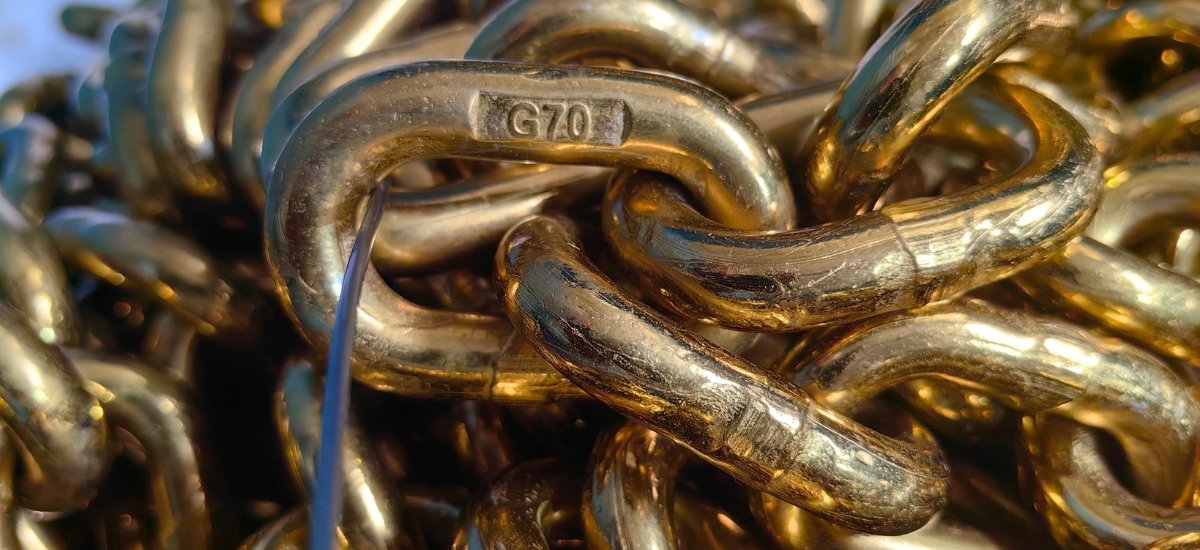
OSHA’s alloy chain sling guide calls for checks on sling identification, rated load, hitch type, and angle. OSHA rules apply to relevant work in the United States; buyers in other markets must check their local rules and contract standards.
This difference matters when you order. If the job is to secure cargo on a vehicle, check the chain, binder, hooks, and anchor points as a tie-down system. If the job is to raise a load from the ground, buy a complete lifting sling that is designed, assembled, marked, and checked for that use. Replacing a length of G70 chain with G80 chain does not automatically make the existing hooks or the whole assembly suitable for lifting.
Stainless steel chain is a separate material choice. It may help in a specific corrosive setting, but the words “stainless steel” do not tell you its grade, working load limit, or lifting approval. Set the job and required rating first. Then choose the material and surface condition for the environment.
Where Do Weldless Chains Fit?
Weldless chains are often chosen for a link shape, appearance, or light connection need. The names below describe designs or common uses. They are not load certifications by themselves.
- Double loop chain has interlocking double-loop links. It is used in hardware hanging, displays, and accessory connections. Check link size, finish, and the allowed load required for the project.
- Jack chain has light links and is often used for lighting, signs, and other light hanging work. The fact that it can hang an item does not make it a lifting chain.
- Sash chain is often used with window counterweights and similar mechanisms. For a replacement, check the original link size and equipment requirements.
- Single loop chain is used for general utility fittings, pipe supports, and suitable manual controls. Check the link dimensions and load requirements of the complete support or control assembly.
- Lock link chain is offered for suitable manual valve chainwheel operators. Select it against the chainwheel maker’s specified chain type and dimensions.
These last two names can overlap in supplier catalogs, including Tuohai’s. A shared name does not establish that two sizes or products are interchangeable. Confirm the drawing, dimensions, and approved application.
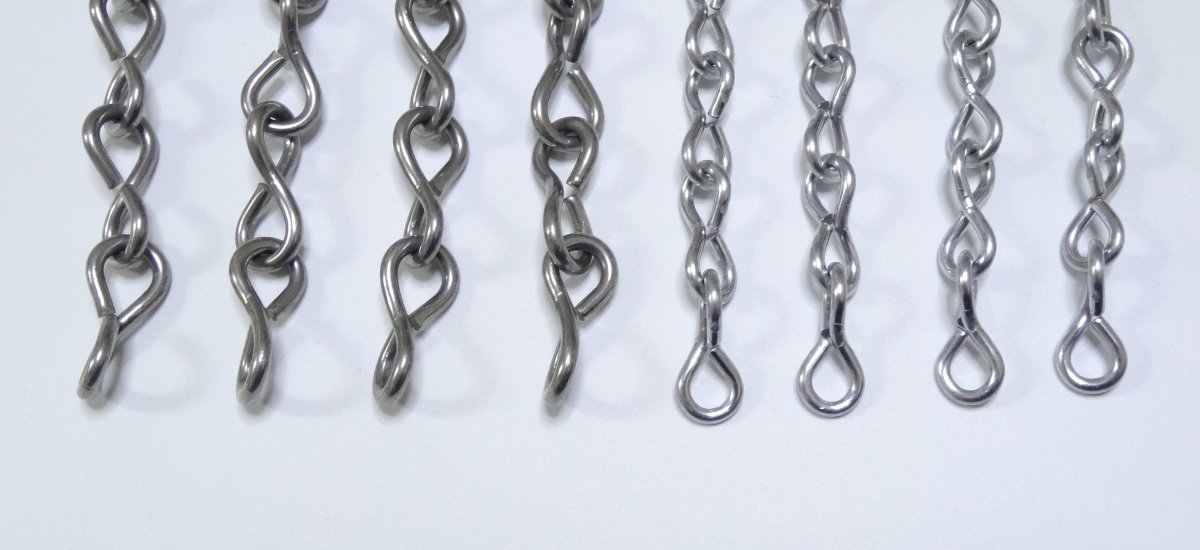
The same weldless style may come in different materials and finishes. Do not send only a general chain name in an inquiry. Include where it will be used, the fittings, length, dimensions, and actual load. If a chain will support an object above people or serve another safety-critical purpose, first confirm the design and inspection requirements for the full system. Do not buy it as an ordinary decorative chain.
How Should You Specify an Industrial Link Chain?
Tell the supplier what the chain must do before listing its material or finish. Then provide these details:
- Job and safety needs. State whether the chain will drive a machine, secure cargo, lift a load, tow, hang an item, or fit a specific device. The job changes the chain family and standards you need.
- Chain type and grade. For welded chain, give the required grade, such as G30, G43, G70, or an applicable alloy grade, plus the standard. For weldless chain, give the exact style, a drawing, or an approved sample.
- Dimensions and length. Give nominal diameter, inside link length and width, overall length, and the sizes of any sprocket, hook, or connector it must fit. Chain families may use different size systems.
- Rating of the complete assembly. When a rated load matters, state the working load and identification needed for the chain, hook, connecting link, binder, or sling. Do not rate the whole assembly by one length of chain alone. OSHA’s U.S. chain-sling rule requires durable identification and limits an assembly when a fitting has a lower rating.
- Service environment. Describe indoor or outdoor use, moisture, salt, chemicals, temperature, and cleaning. Choose material and finish with those conditions in mind.
- Documents and acceptance. State the material, applicable standard, markings, inspection, test, or traceability documents you need. “Heavy duty” is not a measurable requirement.
- Supply form. Say whether you need bulk chain or an assembly with end fittings. Give the length per piece, packaging, labels, and lot identification needed.
Keep load terms separate when reading test documents. Working load limit (WLL) is the maximum working load for the stated conditions. Proof load is a specified verification force, and a proof test applies that force to check the product. Minimum breaking force is a minimum strength requirement in a destructive tensile test. Neither proof load nor minimum breaking force is an allowed working load. Use the applicable product standard, manufacturer’s rating, and assembly identification; do not calculate a WLL yourself from one breaking-test result. The NACM welded chain specification distinguishes these values.
If all you have is a photo and an estimated diameter, collect the equipment model, application, link measurements, markings, and original purchase record first. For a safety-related replacement, do not guess that a similar-looking chain will work. If a safety-critical detail is still unknown, have a qualified person assess it.
Frequently Asked Questions
Can you identify an unmarked link chain’s grade by color or thickness?
No. Color and size may help narrow the search, but they do not prove grade, origin, or rated load. Check the original documents, link markings, and manufacturer information. If you still cannot confirm them, do not use the chain for lifting. The U.S. FMCSA cargo securement rules give a specific working load treatment for unmarked welded steel chain used as a tie-down. That rule does not approve an unknown chain for lifting.
Can two link chains with the same diameter replace each other?
Not on diameter alone. Inside link length and width, material, grade, manufacturing standard, and fit with end hardware may differ. If the chain carries a rated load, compare the markings and documents for the complete assembly too.
Can a stainless steel link chain be used for lifting?
The material name alone cannot answer that. A specific chain and complete sling must be designed for lifting, have the required rating and identification, and meet the rules at the worksite. Corrosion resistance does not establish lifting suitability.
Conclusion
First decide whether the chain must transmit power, move material, raise a load, secure cargo, or hang an item. For a link chain, then choose welded or weldless construction, grade, material, size, and fittings, and check the rating of the complete assembly. Putting these details in your request for quotation will give you quotes that are easier to compare and verify than a request for “industrial chain” alone.


 English
 Russian
 Spanish
 Czech
 German