


If you are choosing S hooks for a display, a chain connection, or a hanging system, a product photo will not tell you how much weight the hook can hold. Hooks that look alike can have different load ratings. Choosing one by size or by a “heavy duty” label alone can leave you with a weak connection. This article explains which rating to use and how to check the limit of the complete setup.
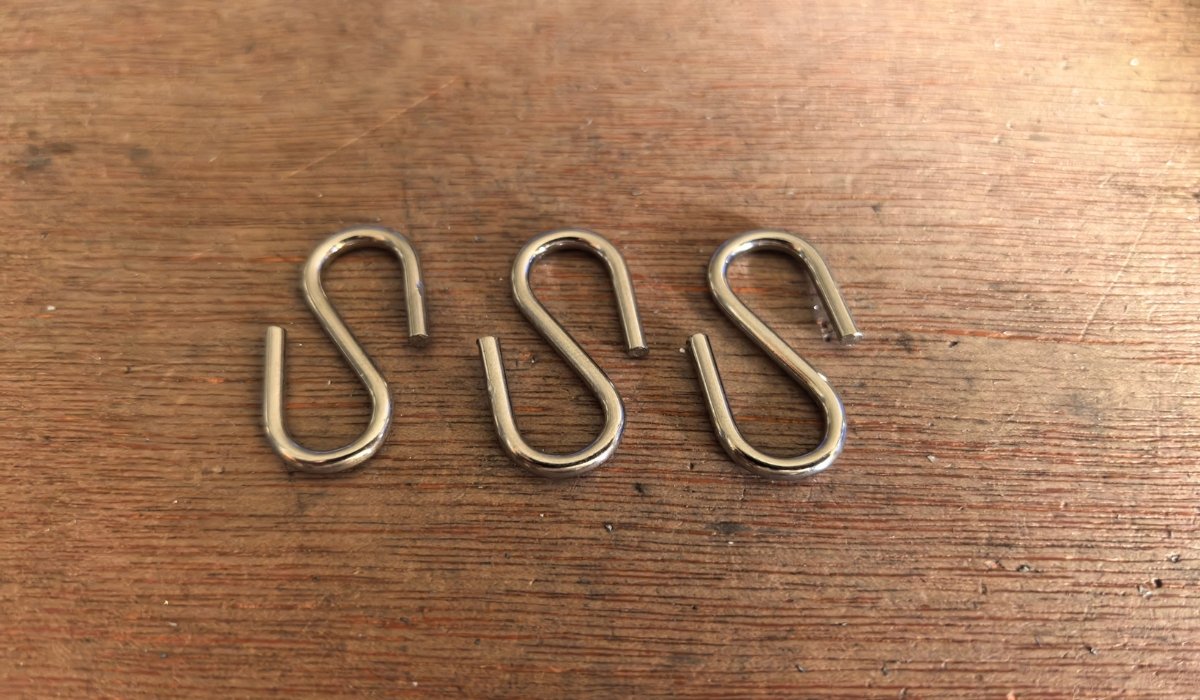
How much weight can an S hook hold?
There is no single weight limit for all S hooks. The answer is the working load limit (WLL) stated for the exact model and the way it will be used. WLL is the maximum load the manufacturer allows under its stated conditions. If you cannot confirm that rating, you cannot assign a reliable capacity from the hook’s appearance.
A useful S-hook weight capacity chart must identify the models it covers. Match the hook’s model number, material, dimensions, and approved use to the listed rating. A diameter or a “heavy duty” label alone is not enough to choose a weight limit.
What do WLL, breaking strength, and proof load mean?
Look for WLL when you need a limit for normal use. A product page may instead place a larger breaking-strength number in its title. Breaking strength describes a force at which a test sample fails or stops working as intended. It is not the load you should hang from the hook in service.
Proof load is different again. It is a test force used to check that a product meets a stated requirement. Passing a proof test does not make the proof-load figure the working limit.
Do not divide a breaking-strength figure by a fixed number to invent a WLL. The rating depends on the product, its intended use, and the manufacturer’s stated basis. If a supplier gives you only a breaking result, ask for the WLL of the finished hook and exact model.
What changes the load an S hook can carry?
The hook’s size and shape both matter. Wire diameter, inside length, opening size, bend shape, and how the ends connect to other parts all affect the finished product. A diameter chart without a matching model and design cannot establish your hook’s rating.
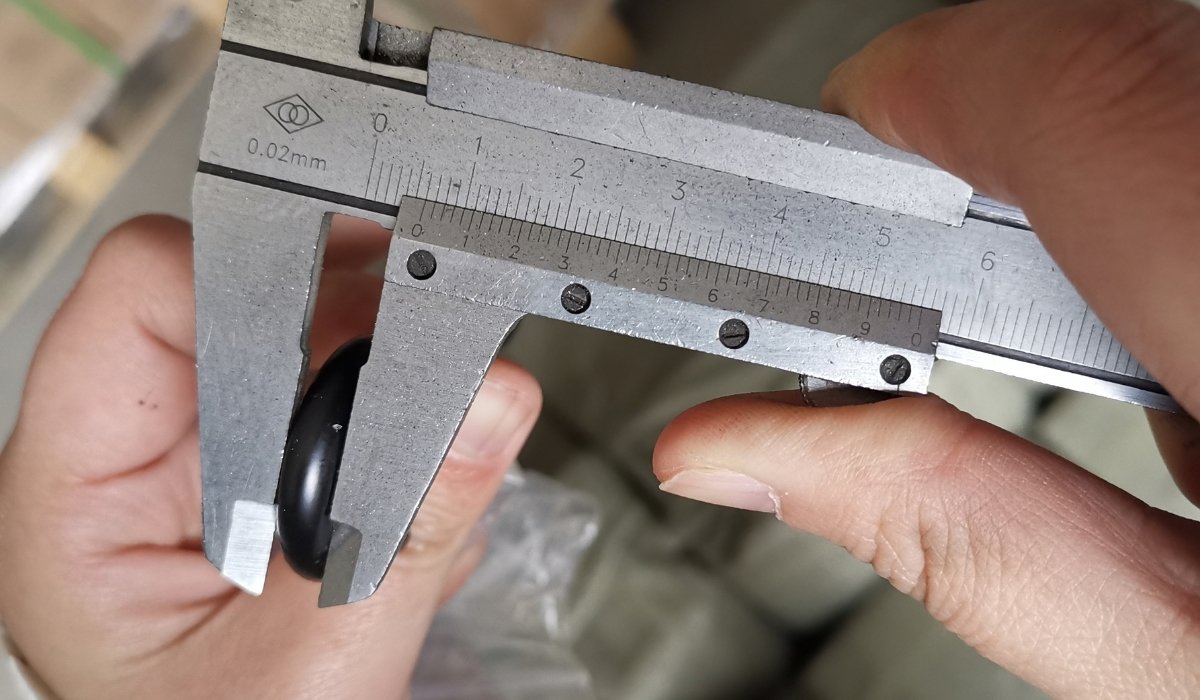
Material and manufacturing matter too. Carbon steel, stainless steel, and alloy steel hooks can be made for different tasks. A zinc coating or another finish can help meet a corrosion or appearance requirement, but the finish alone does not establish a higher WLL. Do not assume that a stainless steel hook is stronger than a steel hook of the same size, or that a closed end has a higher rating than an open one. Check the actual model data.
Follow the loading instructions for the exact product. Check the required load position and the limits on tip loading, side loading, and shock loading. If the instructions require the load to sit in the bowl of the hook, keep it there. If they prohibit a loading method or require you to avoid it, choosing a lower weight does not remove that restriction.
Wear, bending, and corrosion need a separate inspection decision. Follow the manufacturer’s inspection criteria to determine whether the hook can stay in service. Stop using a damaged hook while its condition is assessed. Do not assign a lower WLL yourself to compensate for damage.
How much can the whole hanging setup hold?
The hook is only one part of the load path. Check the rail or structure above it, its anchor, any chain or cable, each connector, and the hook at the load. A strong S hook cannot make a weaker support or chain stronger. The assembly must stay within the applicable limits of all its parts; its weakest component sets an upper limit, not a guarantee for the complete setup. The support and anchor must also be able to carry the load in the actual installation.
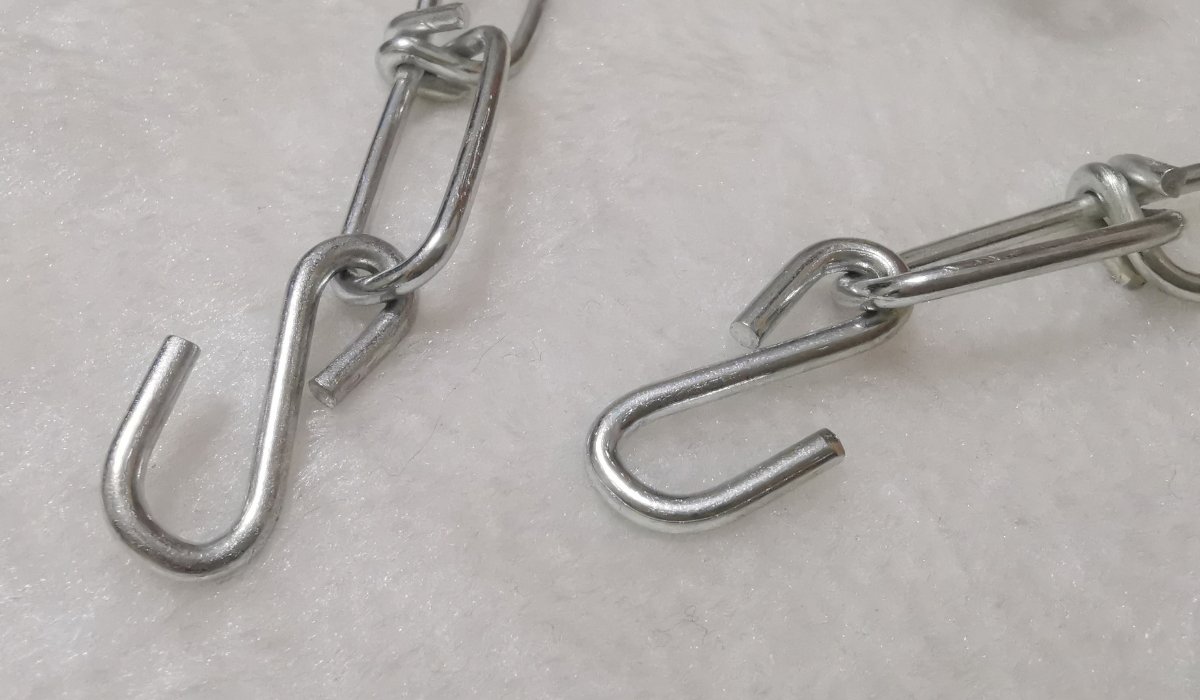
The arrangement matters as well. Hooks connected in a line do not add their ratings together; each hook carries the load passed through its position. Two hooks placed side by side do not automatically give you twice one hook’s limit. The load may not split evenly, and both hooks may still depend on one weak attachment point. This is a real question raised by S-hook users; the safe answer comes from the rated parts and the actual load path, not a simple count of hooks.
Can an S hook be used for overhead lifting?
Do not treat a general hanging hook, a cargo tie-down hook, and a lifting hook as interchangeable. An S shape alone does not show that a hook is suitable for lifting. You need the specific model’s intended-use information and load rating.
For a lift, confirm that the specific hook is intended and rated for lifting, that all connected parts are compatible, and that the complete arrangement meets the rules for the place and task. As one US construction example, OSHA requires the manufacturer’s recommendations to be followed when determining the safe working load of an identifiable hook. This rule is not a global rating for S hooks. If the application involves lifting people or suspending a load over people, use equipment and a plan approved for that exact purpose.
How can you confirm the right rating before buying?
Start with the job, then check the product. This order helps you avoid buying a hook that fits the opening but lacks the required rating.
- Define the load and use. Record the item’s weight, whether it will move, where the hook will be used, and whether the job is hanging, cargo restraint, or lifting.
- Identify the exact hook. Ask for the model number, material, wire diameter, overall dimensions, opening sizes, and end shape. A generic “heavy duty S hook” description is not enough.
- Request the model’s rated data. Confirm its WLL, approved load direction and connections, and any limits in the manufacturer’s instructions. If testing documents are needed, ask what was tested: raw material, the finished hook, or the full assembly.
- Check the complete setup. Compare the ratings and fit of the hook, chain or cable, connector, anchor, and support. Also check whether movement, weather, corrosion, or wear changes the choice.
For a custom S hook, give the supplier the drawing and intended use before asking for a load rating. A test result from a different shape, material, or opening is not a rating for your new design.
Conclusion
Use the manufacturer’s WLL for the exact S hook and intended use. Check every supporting part and connection. Size, material, and a “heavy duty” label cannot establish a safe weight limit on their own. If the rating is unclear, confirm it before loading the hook.
FAQ
What if an S hook has no published load rating?
Ask the supplier to identify the exact model and provide its rated-use information. If no applicable rating can be verified, do not use that hook for a load where failure would matter. For a regulated lifting job, follow the rules and competent assessment required for that job; do not set a WLL by eye.
Can you bend an open S hook closed to make it stronger?
Closing an end may help keep a connected part from slipping out, but it does not by itself raise the published WLL. Follow the manufacturer’s assembly instructions. If you change a finished hook outside those instructions, ask the manufacturer whether its rating still applies.
Is a “heavy duty” S hook suitable for a moving load?
The label alone is not enough. A WLL for static use does not establish a safe limit for shock loading. Confirm that the manufacturer permits the intended movement and connection for the exact model. If shock loading is prohibited, reducing the weight does not make it an approved use. Check the complete system as well.
Should a bent or rusty S hook still be used?
Do not assume that its original rating still applies. Remove a hook with visible bending, cracks, heavy wear, or corrosion from service and follow the manufacturer’s inspection or replacement guidance. A coating can improve corrosion protection, but it cannot restore a damaged hook’s rated capacity.


 English
 Russian
 Spanish
 Czech
 German