


If your purchase list includes both G70 and G80 chain, start with the job each chain must do. A chain that secures cargo on a truck and a chain sling that lifts a load need different checks. The grade number matters, but it cannot tell you on its own whether a chain is fit for either job. This comparison explains the main differences and what to confirm before you order.
What do the grade numbers and materials tell you?
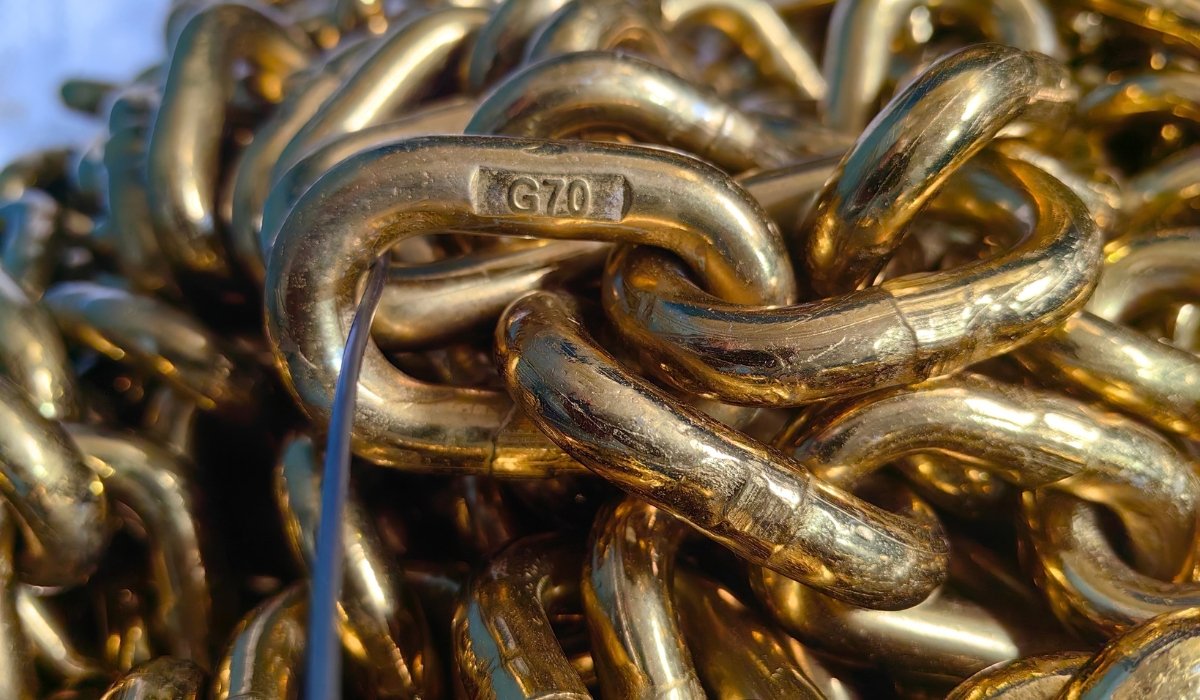
G70 is commonly a heat-treated carbon steel chain sold for transport and tie-down work. G80 is a heat-treated alloy steel chain used in lifting assemblies. The grade numbers describe strength classes based on the chain link’s design breaking force. They are not a working load limit for every chain marked 70 or 80. Chain size, the product standard, the manufacturer’s rating, and the assembled parts matter too. Color is not a reliable grade marking; check the link mark and product information. The NACM chain specification explains the grade calculation and identifies G70 as transport chain.
You may see G70 described as “proof tested.” That alone does not qualify it for overhead lifting. A proof test checks a chain against a specified test load; it does not change the product’s intended use or turn a transport tiedown into a rated lifting sling. Equally, you should not assume G70 cannot stretch at all or that G80 will always give visible warning before a failure. Those claims are too broad to guide a purchase.
Can the two grades be used for the same job?
For overhead lifting, do not substitute G70 transport chain for a rated chain sling. A transport WLL alone does not establish whether a chain is suitable for suspending a load. For a G80 lifting application, you need a sling built for that purpose, with suitable hooks and connecting parts, an identification tag, and a rated load for the way you will use it. Sling angle, hitch type, and the weakest component can change the allowable load. OSHA’s alloy chain sling guidance explains those factors for US workplaces.
Pulling a load along the ground is a different job from suspending it on a chain. A product rated for towing or pulling does not gain a lifting rating simply because the load is light or close to the ground.
If a supplier describes a product as suitable for “general lifting” or “hoisting,” ask for the exact application, product standard, and rated assembly details. Do not assume that this description applies to all G70 transport chains. In US construction, sling requirements still apply when a lifted load never passes over workers’ heads, as OSHA explains in its interpretation of chain sling requirements.
For cargo securement, G70 is the familiar transport choice, but G80 is not automatically excluded. US FMCSA rules include WLL entries for both grades. To use either one as a tiedown, confirm the chain, binder, hooks, connectors, and vehicle anchor points as a complete system. Under the US rule, the tiedown’s WLL cannot exceed its lowest-rated component or anchor point. Requirements in other markets may differ; check the rules that apply to your shipment. FMCSA’s cargo securement guide sets out the US approach.
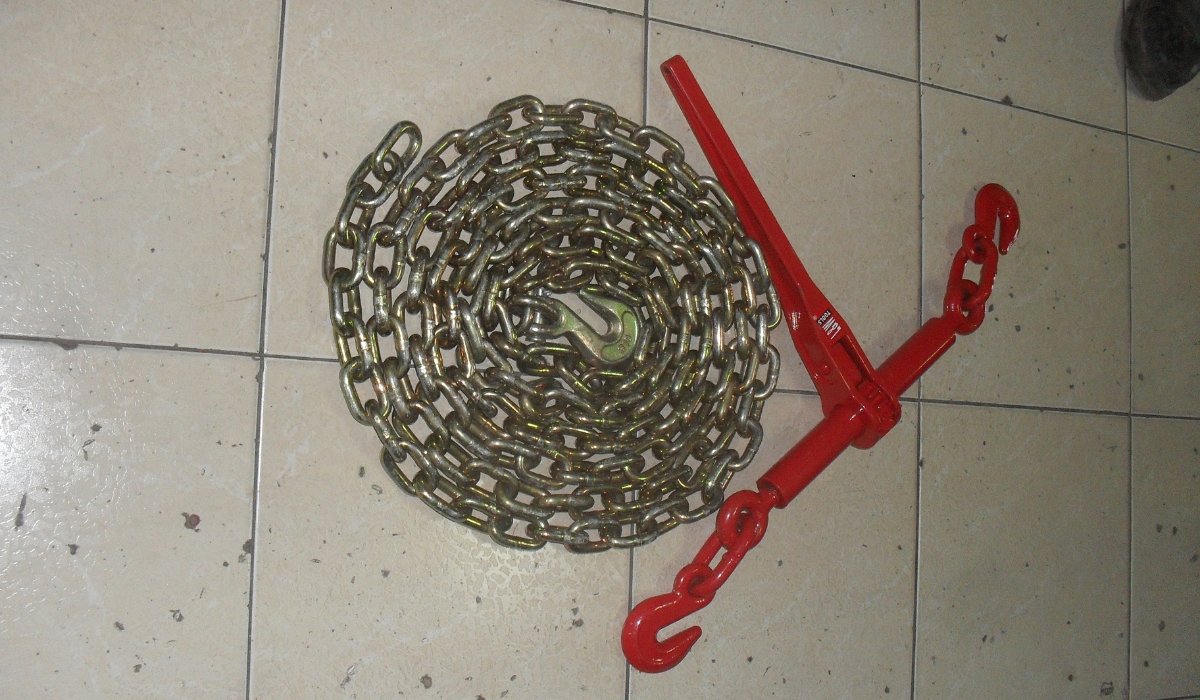
This difference also matters when you order loose chain rather than a finished assembly. A length of G80 chain is not, by itself, a rated chain sling. Likewise, a length of G70 chain does not tell you the WLL of a tiedown after you add a binder and hooks.
G70 vs G80 chain at a glance
| Question | G70 chain | G80 chain |
|---|---|---|
| What is it commonly made from? | Heat-treated carbon steel | Heat-treated alloy steel |
| What is its common role? | Transport chain for cargo tie-down | Alloy chain used in lifting slings; it may also be used in load binding when the full tiedown is suitable |
| Can you use it for overhead lifting? | No. G70 transport chain is not intended for overhead lifting. | G80 chain can be used in an appropriately rated chain sling. The chain grade alone does not rate the finished sling. |
| What rating should you check? | The chain’s working load limit (WLL) and the limit of the complete tiedown | The finished sling’s rated load for lifting, or the complete tiedown’s WLL for transport |
Is G80 always stronger than G70 at the same chain size?
The G80 strength class is higher, but that does not mean every published WLL for a nominal size is higher. The following entries come from the US cargo securement table. They illustrate why you must check the actual size, rating, and intended use before comparing products.
| Nominal size | G70 transport chain WLL | G80 alloy chain WLL |
|---|---|---|
| 5/16 in (8 mm) | 4,700 lb | 4,500 lb |
| 3/8 in (10 mm) | 6,600 lb | 7,100 lb |
These are US cargo tiedown table values, not lifting sling ratings or universal product specifications. If the manufacturer marks a different WLL, US rules use the marked value. The table also does not rate the binder, hook, or anchor point. For lifting, use the rated load on the finished sling and the limits for its actual hitch and angle. Do not calculate a lifting WLL from chain breaking force or from a cargo table.
What should you put on the purchase order?
If you are buying chain for cargo tie-down, state the market and transport rules, chain grade and size, required WLL, length, finish, and end fittings. Ask for the ratings of the binder, hooks, and other parts in the tiedown. Compare complete assemblies if you buy them ready to use. A higher chain grade offers no extra tiedown capacity when another part sets a lower limit.
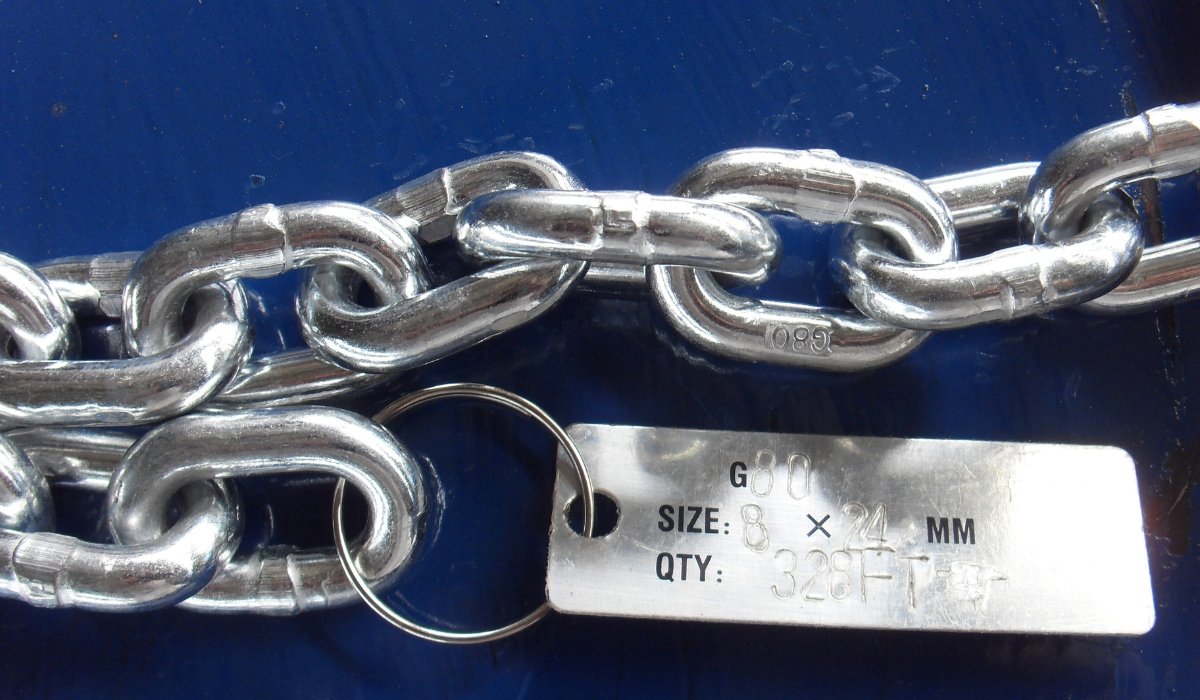
If you are buying a lifting sling, state the load, lifting method, number of legs, hitch, angle, working environment, and required rated load. Ask for the sling tag information and the maker’s documents for the complete assembly. Confirm that the chain and every attachment are suitable for lifting. In US construction work, OSHA requires durable sling identification showing size, grade, rated capacity, and manufacturer. Local rules and project requirements may add other checks.
If your business needs both transport and lifting products, list them as separate line items. This makes it easier to check the correct rating and documents for each use. Tuohai Hardware lists both G70 transport chain and G80 chain in its product range, but a specific size, rating, test record, or sling assembly must be confirmed for the item you plan to buy.
The practical choice
Choose by use first. G70 is a transport chain for cargo restraint; G80 alloy chain can be used in a properly rated lifting sling and, where rules and components permit, in cargo securement. Then compare the specific product and full assembly ratings. When you request a quote, state the intended use and required documents so the offered chain can be checked against the right standard and load limit.


 English
 Russian
 Spanish
 Czech
 German