


If you are replacing anchor chain, the letters BBB do not tell you everything you need to buy. They identify a short-link windlass chain, but the chain must still match your gypsy, required load, material, and finish.
What Is BBB Chain?
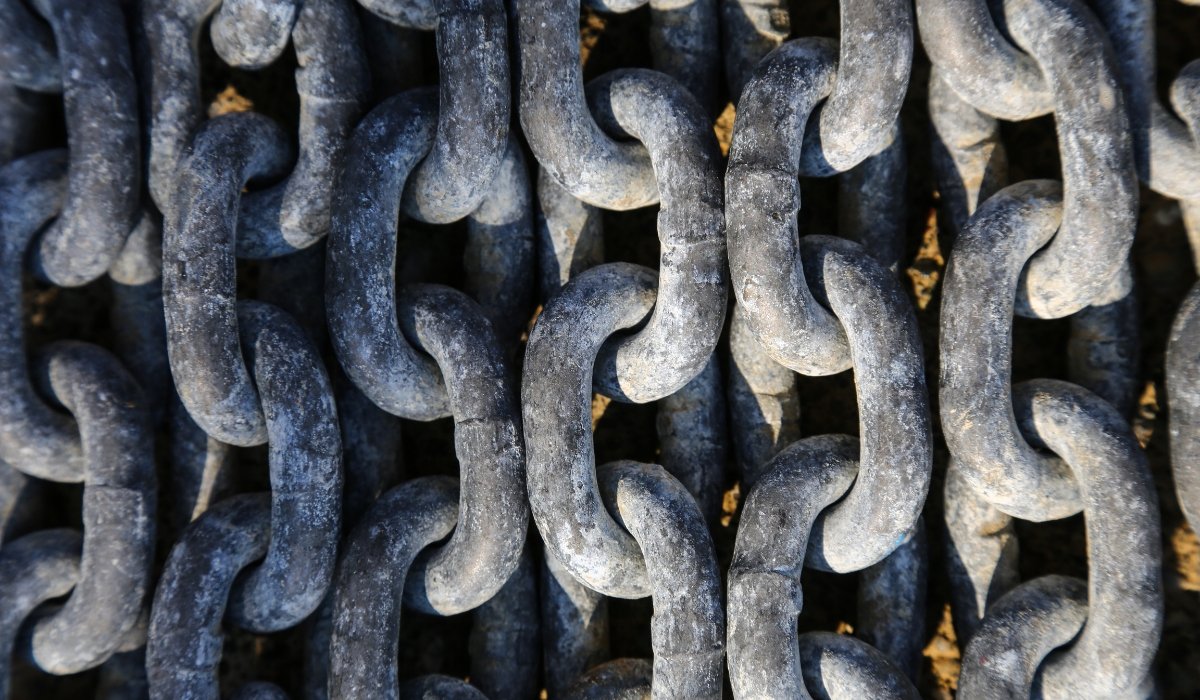
BBB chain is a short-link chain with a calibrated pitch, mainly used in marine anchoring systems. It is also called BBB anchor chain, BBB windlass chain, Triple B chain, or 3B chain.
Most commercial BBB chain is made from low-carbon steel and sold as Grade 30 chain. Its links are shorter and more compact than ordinary proof coil links. The pitch and link dimensions are controlled so the chain can engage a matching windlass gypsy, which is the shaped wheel that pulls in and pays out the anchor chain.
This distinction matters: BBB is a market name for a short-pitch link form with dimensions controlled for windlass engagement; it is not one complete, universal purchasing standard. Grade, material, finish, dimensions, working load limit, and windlass compatibility must still be confirmed separately.
Why Does BBB Chain Have Short, Calibrated Links?
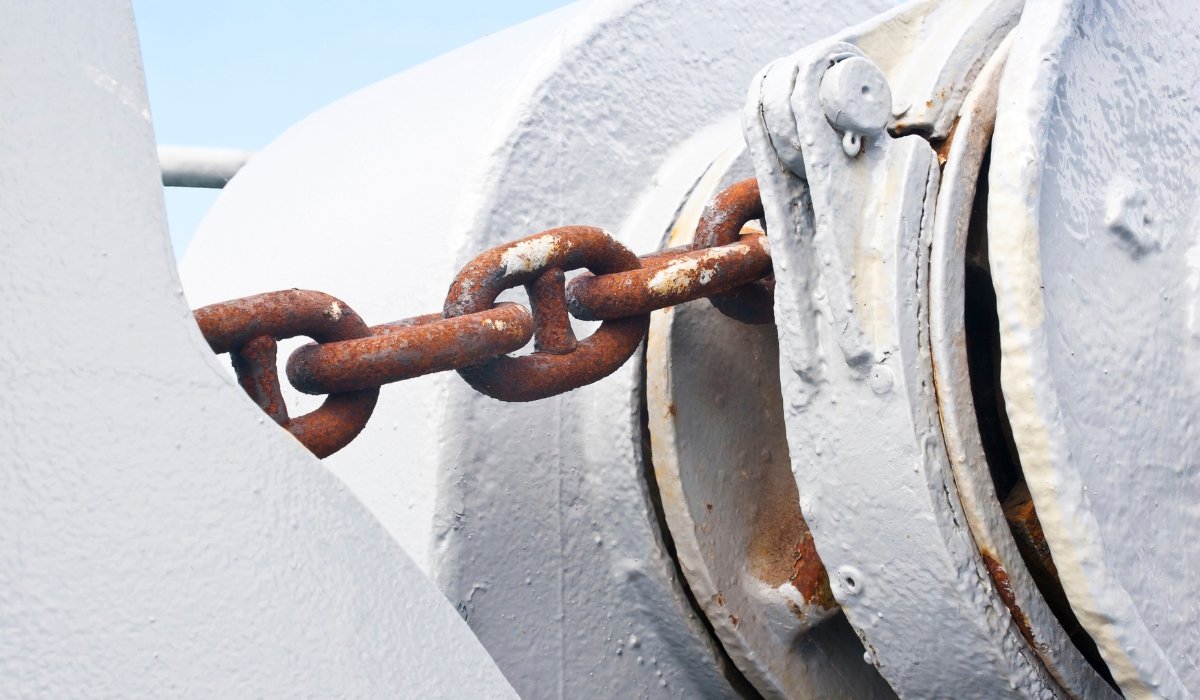
A windlass does not pull chain by friction alone. Each link must sit correctly in the pockets of the gypsy. If the pitch, wire diameter, or inside width is wrong, the chain may ride up, skip, bind, or damage the gypsy.
BBB chain uses a short and consistent pitch to improve this engagement. The links can also articulate easily with each other, allowing the chain to pass around the gypsy and drop into the chain locker.
“Calibrated” does not mean that every BBB chain fits every windlass. It means the important link dimensions are controlled to a defined pattern. Your chain still has to match the size and chain type listed by the windlass manufacturer.
Is BBB Chain the Same as Grade 30 Chain?
Not exactly. The two terms describe different parts of the specification.
- BBB mainly describes the short-link geometry and its use with suitable windlasses.
- Grade 30 describes a common strength grade for general-purpose carbon steel chain.
Many BBB products are Grade 30, so the terms often appear together. However, you should not use them as automatic synonyms. A supplier may also offer chain made to BBB dimensions in another material or strength level. Always read the full specification rather than relying on the product name.
BBB Chain vs Proof Coil Chain
BBB chain and proof coil chain are commonly made from low-carbon steel and may both be sold as Grade 30. Their link geometry is the important difference.
Proof coil chain usually has longer links and may not have the uniform pitch required by a windlass. It works well for many general-purpose applications, but you should not run it through a windlass unless the equipment manufacturer specifically approves that chain.
BBB chain has shorter, more consistent links designed for compatible gypsies. If your system uses a windlass, proof coil chain is not a direct replacement simply because the nominal diameter is the same.
BBB Chain vs G4 Chain
G4 is a common market name for marine high-test chain, but grade labels are not completely uniform. Some North American products use G4 for Grade 43 chain, while other manufacturers or specification systems use it for Grade 40. You cannot determine the grade or dimensions from the G4 name alone. When product data are directly comparable, high-test chain normally has a higher working load limit than Grade 30 BBB chain at the same nominal diameter.
Strength does not decide mechanical fit. A 5/16-inch G4 chain and a 5/16-inch BBB chain can have different pitches and link dimensions. A gypsy made for one may not handle the other correctly.
For this reason, changing from BBB to G4 or another high-test chain may also require a different gypsy. Check the windlass manual, gypsy part number, stated strength grade, and approved chain table before you treat the change as an upgrade.
| Point | BBB chain | Proof coil chain | G4 / high-test chain |
|---|---|---|---|
| Typical link form | Short, calibrated links | Longer general-purpose links | Calibrated links in a G4 pattern |
| Common grade | Grade 30 | Grade 30 | May be labeled Grade 40 or Grade 43; verify the product system |
| Typical windlass use | Yes, with a matching BBB gypsy | Usually no | Yes, with a matching G4 gypsy |
| WLL at the same nominal size | Check the stated grade and product table | Check the stated grade and product table | Usually higher when data are directly comparable |
| Can it replace another type based on nominal diameter alone? | No; check the specific gypsy and chain specification | No; check the specific gypsy and chain specification | No; check the specific gypsy and chain specification |
The table gives a category-level comparison. The supplier’s dimensional and load data remain the controlling documents for a purchase.
Where Is BBB Chain Used?
BBB chain is mainly used as a marine anchor chain in an anchor rode, the system connecting a vessel to its anchor. It may form the full rode or the chain section of a rope-and-chain combination.
Its short links make it useful where chain must travel smoothly over a compatible windlass and settle into limited locker space. It is especially relevant when maintaining older equipment that was originally supplied with a BBB gypsy.
BBB chain is not automatically suitable for every marine task. Mooring systems, commercial vessels, classed equipment, and unusual environmental loads may require different standards, grades, dimensions, or inspection rules. Start with the equipment and project requirements, not the familiar BBB name.
Why Is BBB Chain Often Hot-Dip Galvanized?
Carbon steel needs protection in wet and salty environments. Hot-dip galvanized chain has a zinc coating over the steel and is commonly used for marine anchor chain.
The coating does not make the chain corrosion-proof. Contact wear at the gypsy, abrasion on the seabed, trapped salt, and poor drying can gradually remove or damage the zinc. Inspection should therefore cover both rust and mechanical wear.
Stainless steel chain can provide another corrosion-resistant option, but material choice does not solve compatibility by itself. A stainless chain must still match the gypsy dimensions and required load documentation.
Can BBB Chain Be Used for Overhead Lifting?
No. BBB chain is intended for anchoring and general-purpose use. Manufacturers such as Peerless and Titan mark their BBB chain as not for lifting or hoisting.
Do not infer lifting suitability from the chain’s appearance, breaking load, or Grade 30 designation. Overhead lifting requires chain and components designed, marked, tested, and documented for that purpose. An anchor chain working load limit is not permission to use it as lifting chain.
How to Specify BBB Chain for a Windlass
Begin with the windlass, not with a chain listing. Find the equipment model, gypsy part number, and approved chain specification in the manufacturer’s manual.
Then confirm these points with the chain supplier:
- Chain designation and grade: State BBB or 3B and the required strength grade.
- Nominal size and actual dimensions: Confirm wire diameter, pitch or inside length, and inside width. Nominal diameter alone is not enough.
- Working load limit: Use the value assigned to that exact chain by its manufacturer or applicable product standard. Breaking load and WLL are different parameters; do not convert one into the other with an unconfirmed safety factor.
- Material and finish: Specify carbon steel or another approved material and the required coating, such as hot-dip galvanizing.
- Marking and test records: Agree on link marking, proof testing, batch traceability, and any inspection documents required for your market or project.
- End fittings and total length: Check that shackles, swivels, rope connections, and enlarged end links pass through or work with the complete anchoring system.
For a replacement order, ask for a short sample or test length when practical. Run it through the actual windlass under controlled conditions before ordering a full drum. This simple check can reveal pitch or width problems that a product name does not show.
How Should You Inspect BBB Chain?
Follow the chain manufacturer, windlass manufacturer, and applicable project rules for inspection intervals, methods, and rejection limits. When buying replacement chain, obtain or confirm these requirements as part of the specification. General visual judgment alone cannot determine whether the chain remains acceptable.
If the chain repeatedly skips, binds, or fails to seat in the gypsy, stop forcing the windlass and follow the equipment manufacturer’s instructions for checking chain dimensions, gypsy condition, and system alignment. Acceptance limits for wear, corrosion, deformation, or other defects must also come from the applicable product documents.
Frequently Asked Questions
What does BBB stand for in chain?
BBB, 3B, and Triple B are established market names for this short-link windlass chain. Reliable technical sources consistently describe the product but do not give one well-supported expansion of the three letters. Use the name as a chain designation, not as a substitute for dimensions and grade.
Which documents should you check before accepting BBB chain?
The documents should identify the exact product and batch you ordered. Check the dimensional table, material and grade statement, WLL, link marking, proof-test requirement, and batch traceability. If the project needs third-party inspection or specific certificates, state this before order confirmation rather than adding it after delivery.
Can a rope-to-chain splice or end fitting affect windlass operation?
Yes. A rope-to-chain splice, shackle, swivel, or oversized end link may carry the load but still fail to pass smoothly through the gypsy, chain guide, or chain pipe. Follow the windlass manual for approved connection methods, rope size, and fitting dimensions, then test the complete retrieval and deployment path.
Can I order new BBB chain from the dimensions of a worn chain?
Do not rely on worn-chain measurements alone because wear and deformation can change the result. Start with the windlass model, gypsy part number, and manufacturer’s fit table. Then use measurements across several old links and a physical sample as supporting checks.
Can stainless chain with BBB dimensions replace galvanized Grade 30 BBB chain?
Not from dimensions alone. A dimensional match only indicates that the chain may engage the gypsy; it does not make the material, strength grade, WLL, manufacturing route, or test documents equivalent. Obtain windlass-manufacturer approval and verify the replacement chain’s complete product data.
Can zinc-plated chain replace hot-dip galvanized BBB chain?
Do not treat zinc-plated chain and hot-dip galvanized chain as equivalent products. Their finishes use different processes and can provide different coating coverage and thickness. For an anchor rode exposed to water, salt, gypsy contact, and seabed abrasion, specify the finish required by the chain and equipment documents rather than accepting “zinc coated” as a complete description. The chain must still meet the required BBB dimensions, grade, WLL, and documentation.
Can worn hot-dip galvanized BBB chain be re-galvanized?
Re-galvanizing may be considered only after the chain’s identity, grade, condition, and eligibility for further service have been confirmed from traceable product records and the acceptance criteria set by the chain manufacturer, project specification, or another qualified responsible party. A galvanizer should use that confirmed material and grade information to decide whether and how the old coating can be stripped and hot-dip galvanizing reapplied.
Re-galvanizing does not restore steel lost through wear or corrosion, and it cannot correct stretched, distorted, or dimensionally unsuitable links. After treatment, complete any coating inspection, dimensional and gypsy-fit checks, proof test or other testing, and new records required by the applicable specification. Replace the chain if its continued acceptance cannot be demonstrated.
Conclusion
BBB chain is a short, calibrated windlass chain commonly supplied as galvanized Grade 30 chain. Its value is reliable fit with the correct gypsy—not universal compatibility. Before purchasing, match the link dimensions, grade, WLL, finish, and test requirements to your windlass and anchoring system.


 English
 Russian
 Spanish
 Czech
 German